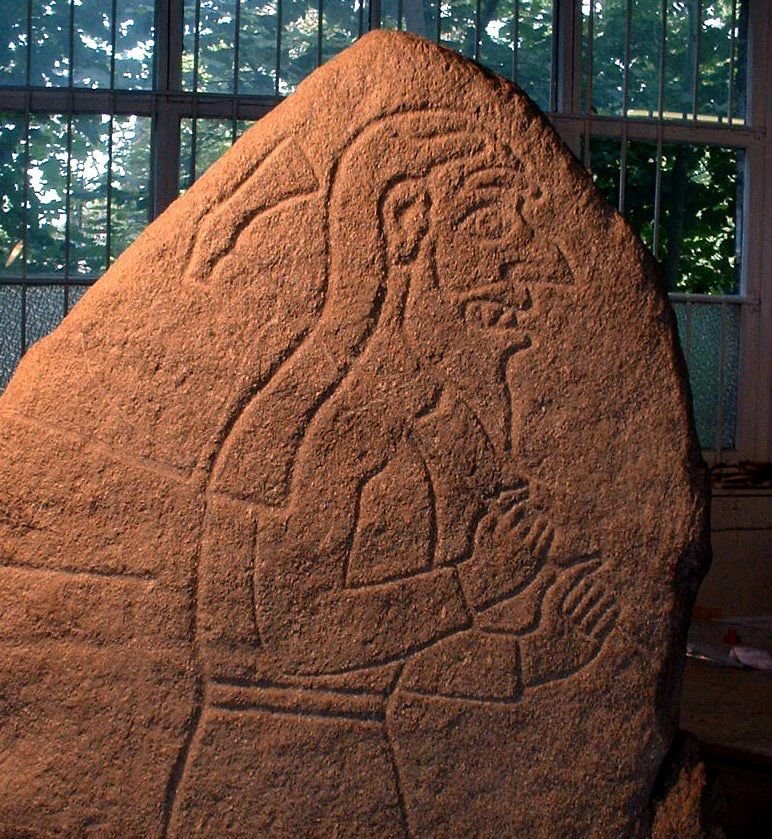
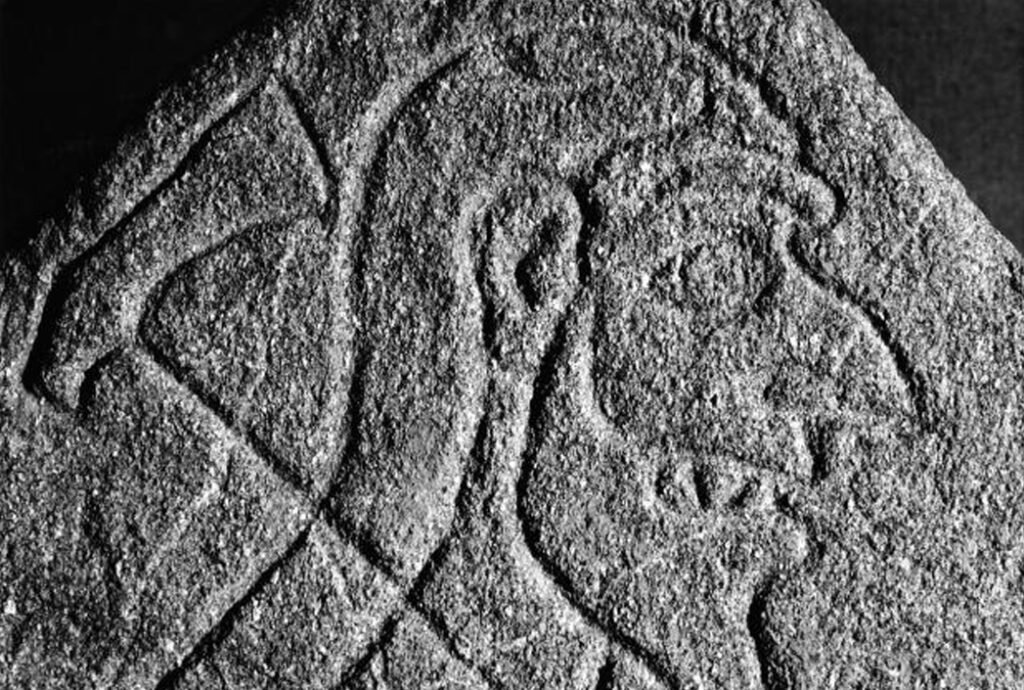
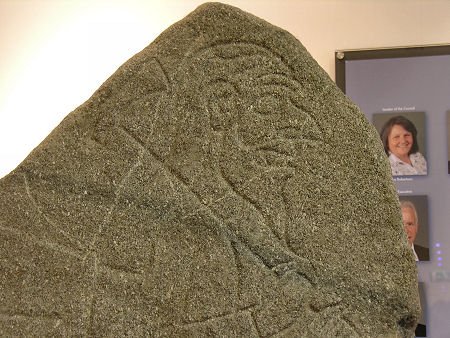
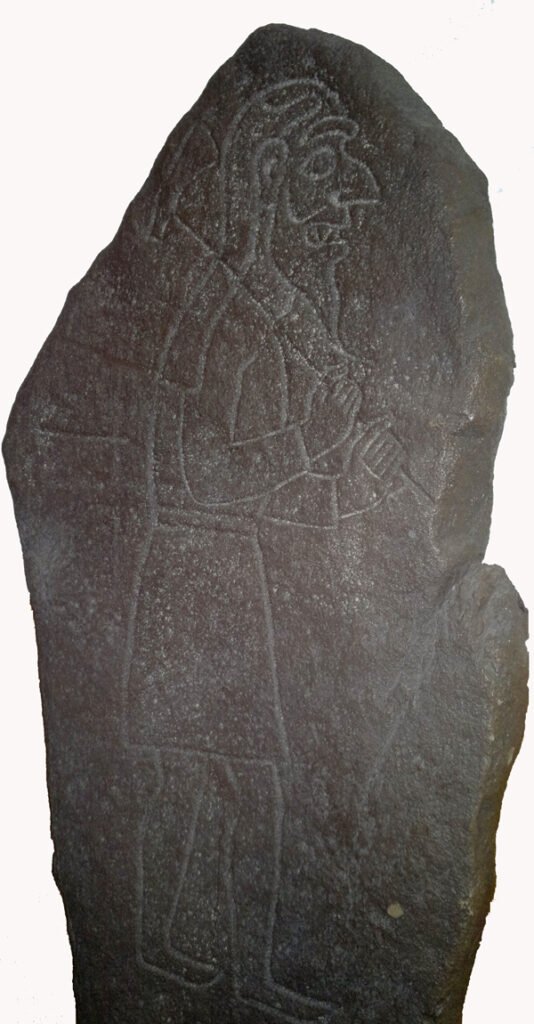
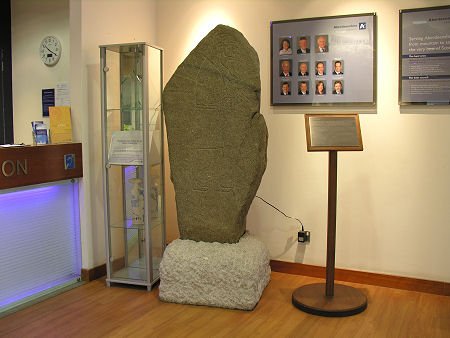
The Rhynie Man is a Pictish carved stone depicting a striking human figure, discovered near Rhynie in Aberdeenshire, Scotland.
Introduction to the Rhynie Man Restoration
The Rhynie Man is one of the most compelling surviving Pictish carvings—an iconic figure whose surface has been gradually softened by weathering, dirt build-up, and natural growth. This restoration focuses on stabilising the stone and improving clarity where it has been obscured, while preserving the original character and tool marks that make it historically meaningful.
How the Restoration Was Achieved
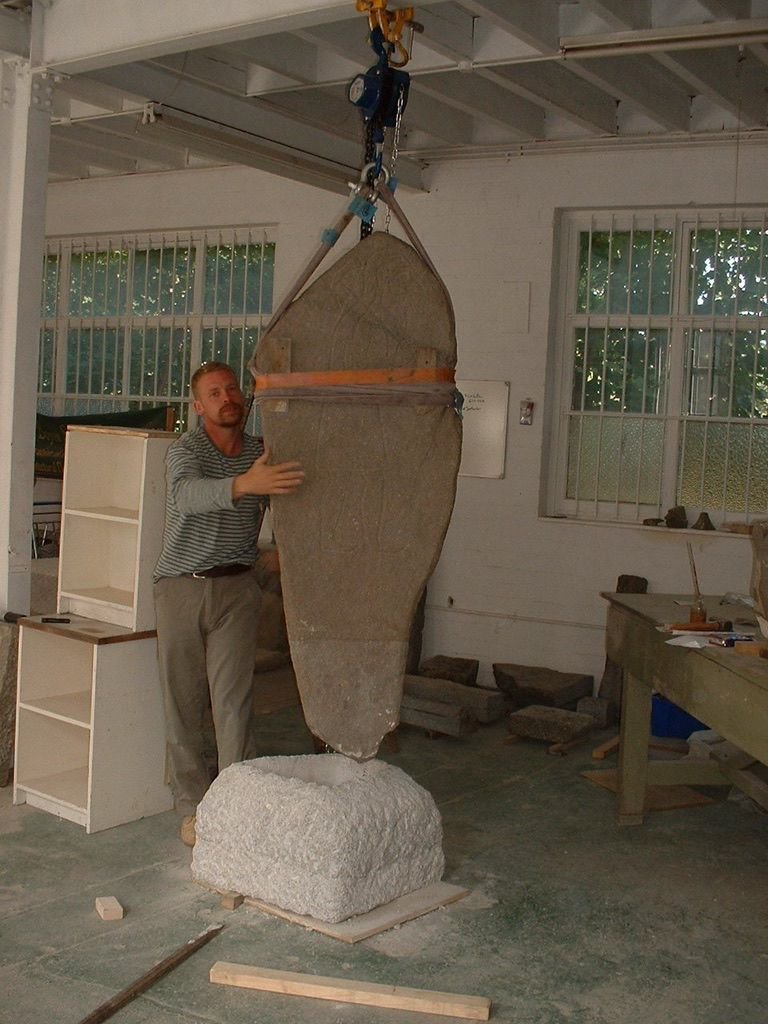
Work began with a detailed condition survey to map cracks, fragile edges, and areas of active decay. The surface was then carefully cleaned using low-impact methods to remove deposits and biological growth without damaging the stone. Where needed, weakened areas were consolidated and small instabilities were secured, followed by full documentation and photography to support future monitoring and responsible care.
Why This Project Matters
The Rhynie Man is more than an artwork—it’s rare physical evidence of Pictish identity and craftsmanship. Protecting the stone preserves the details historians rely on: carving edges, surface modelling, and traces of how it was made and used. By slowing deterioration and keeping the monument readable, this project helps ensure the Rhynie Man remains accessible for learning, research, and public heritage for generations to come.
Ready to begin your project
If you are planning a conservation or restoration project and want expert guidance, reach out to start the conversation.